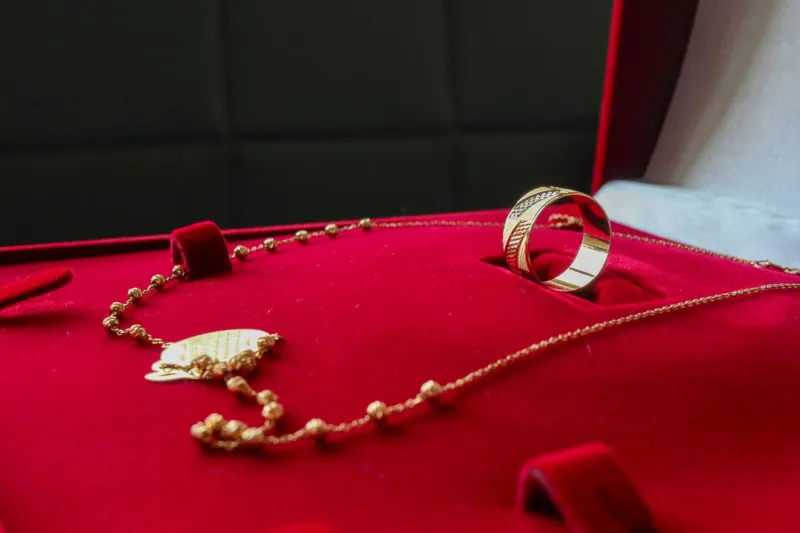
Earned in Gold: Why the Collector's Eye Now Favors the Marked Over the Mint
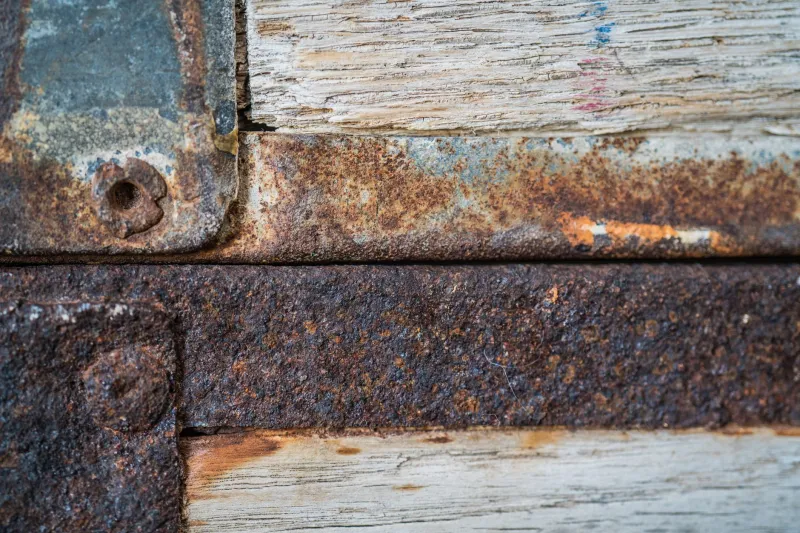
For generations, the conventional wisdom of fine jewelry collecting has been straightforward: preserve condition, protect surfaces, and keep wear to a minimum. A gold piece in flawless condition was a gold piece at its most valuable. Yet something is shifting — quietly, deliberately, and with considerable sophistication — among the collectors who set the tone for how luxury is understood in America today.
Patina, once the reluctant companion of age, is being reconsidered. Not merely tolerated, but actively sought. The soft warmth that accumulates on high-karat gold after years of contact with skin, the faint compression marks left by a clasp worn daily for a decade, the barely-there surface narrative of a bracelet that traveled the world on the same wrist — these are no longer signs of neglect. For a growing cohort of discerning collectors, they are signatures.
Redefining What 'Condition' Actually Means
The traditional grading language of fine jewelry — mint, near-mint, excellent, good — was borrowed largely from the worlds of numismatics and antiques, fields where mechanical perfection and untouched surfaces carry obvious market logic. A coin never circulated is rarer than one passed through a thousand hands. But jewelry was never designed to sit in a vault.
Gold jewelry exists at the intersection of art and body. It was made to be worn, and in being worn, it changes. The question that serious collectors are now asking is not whether a piece shows evidence of use, but whether that evidence speaks to something meaningful. A surface that has been carelessly scratched by improper storage tells one story. A surface that has developed a deep, warm luminosity through thirty years of faithful daily wear tells quite another.
This distinction — between damage and development — is at the heart of the psychological reappraisal now underway. It requires a more nuanced eye, a more patient sensibility, and ultimately a more personal relationship with the object itself.
The Language of Provenance, Written in Metal
Provenance has always mattered in the fine art and antiques markets. A painting with a documented history of distinguished ownership commands a premium that transcends its visual qualities alone. The same principle is beginning to assert itself in gold jewelry, though the documentation here is worn into the surface rather than recorded in a paper trail.
Consider the estate pieces that move through major American auction houses each season. The ones that generate the most conversation — and frequently the most competitive bidding — are rarely the examples in clinical, unworn condition. They are the pieces that carry visible evidence of a life: a locket whose hinge moves with the particular ease of something opened ten thousand times, a signet ring whose engraving has softened at the edges from decades of contact, a chain whose links have developed that characteristic warmth that only sustained wear against skin can produce.
These marks are, in the most literal sense, a record. They constitute what might be called embodied provenance — the history of the piece written not in certificates or receipts, but in the metal itself. For collectors who value narrative as much as material, this is an extraordinarily compelling proposition.
Designing for the Long Arc
What is perhaps most striking about this shift in collector sensibility is that contemporary jewelers have begun to respond to it. A number of designers working at the highest levels of the craft are now making explicit decisions about how their pieces will age — not simply hoping they will endure, but engineering them to develop in specific, beautiful ways over time.
High-karat gold alloys, particularly those in the 22-karat range, develop a surface quality over years of wear that lower-karat alternatives simply cannot replicate. Some designers are returning to these higher purities precisely because of this aging behavior, accepting the trade-off in hardness in exchange for the extraordinary warmth and depth that emerges with time. Certain surface treatments — hand-hammered textures, matte finishes, deliberately organic forms — are chosen not only for their immediate visual impact but for how they will read after a decade of wear.
This is long-arc thinking, and it represents a meaningful departure from the dominant logic of contemporary luxury, which tends to prize the immediate and the spectacular. A piece designed to age beautifully requires the wearer to make a commitment, and it rewards patience with something that cannot be purchased new: the particular beauty of gold that has been genuinely lived with.
The Psychological Dimension
There is, of course, a deeper current running beneath this aesthetic shift. The preference for marked gold over mint gold reflects something about how a certain kind of American collector is choosing to relate to luxury itself.
The acquisition of flawless objects and their careful preservation has long served as one expression of affluence — the ability to own beautiful things and keep them beautiful. But another expression of genuine security, one perhaps more quietly confident, is the willingness to use what one owns fully and without anxiety. To wear the good jewelry. To let it become part of a life rather than a display.
Collectors who prize patina are, in a sense, making a statement about their relationship to their own possessions. They are not curating a museum. They are living with objects they love, and they are untroubled by the evidence of that love. The marked piece is the piece that was trusted. And trust, at this level of material culture, is its own form of value.
What This Means for the Thoughtful Collector
For those building or refining a gold collection, this evolving perspective opens several interesting avenues worth considering.
First, it invites a more generous reading of estate and vintage pieces that might previously have been passed over for showing wear. The question to ask is not simply whether a piece is marked, but whether those marks reflect authentic use or careless handling — and whether the overall character of the piece has deepened or diminished with time.
Second, it suggests that the pieces most worth acquiring are those designed with genuine longevity in mind — pieces whose material quality and formal integrity are sufficient to sustain and reward decades of wear. This is, ultimately, the oldest argument for investing in the finest gold one can afford: not that it will remain unchanged, but that its changes will be worth watching.
Finally, it is a reminder that the most significant pieces in any collection are rarely the ones kept pristine in their original boxes. They are the ones that went everywhere, witnessed everything, and arrived at the present moment carrying the full weight of that history — visible, tangible, and entirely their own.