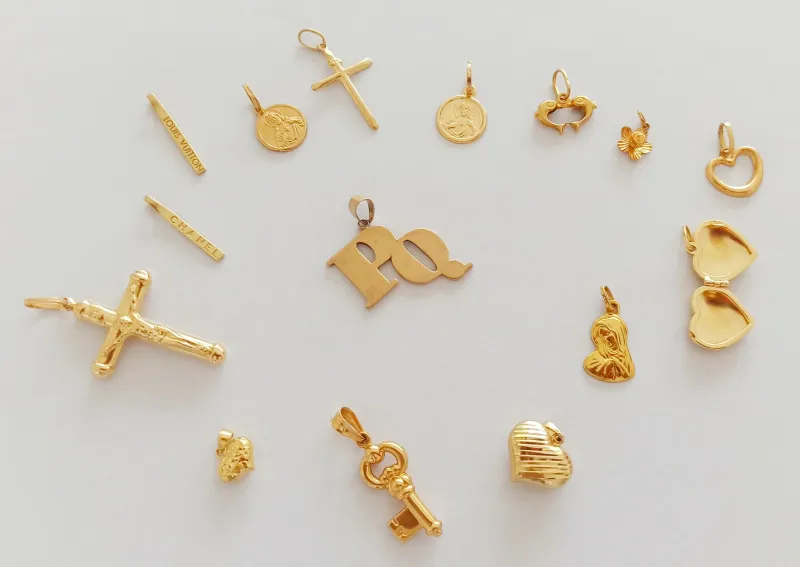
The Conscience of Gold: Navigating Ethical Sourcing in Fine Jewelry

Gold has always carried symbolic weight. It is the metal of permanence, of value, of beauty that endures. But for a growing segment of America's most discerning consumers, the question of gold's origin has become as important as its karat weight or its craftsmanship. Where was this metal extracted? Under what conditions? At what cost to the people and landscapes involved?
These are no longer niche concerns reserved for activist circles. They are the questions being asked in the offices of wealth managers, across dinner tables in Napa Valley and on the Upper East Side, and increasingly, in the showrooms of fine jewelers whose clientele expect beauty and integrity to coexist without compromise.
The luxury jewelry industry is responding — but not uniformly, and not always transparently. Navigating the landscape of ethical gold requires both knowledge and discernment.
The True Cost of Conventional Gold Mining
To understand why ethical sourcing matters, one must first reckon with the realities of conventional gold extraction. Large-scale industrial mining operations, concentrated heavily in regions of Africa, South America, and Southeast Asia, have historically been associated with significant environmental disruption: deforestation, mercury contamination of waterways, and displacement of indigenous communities.
Artisanal and small-scale mining (ASM), which accounts for roughly 20 percent of global gold supply according to the World Gold Council, presents a more complex picture. These operations employ millions of workers worldwide, many of whom depend on gold mining as their primary livelihood. When poorly regulated, ASM can perpetuate dangerous labor conditions and environmental harm. When supported responsibly, it can serve as a legitimate engine of economic development in some of the world's most underserved communities.
For the American consumer purchasing a gold bracelet or a pair of earrings, these realities exist at a considerable distance. Closing that distance — understanding the supply chain that connects a mine in Ghana or Peru to a jewelry counter in New York — is the foundational act of conscious luxury consumption.
What Certifications Actually Mean
The certification landscape for ethical gold can appear reassuringly comprehensive on the surface. Several frameworks have emerged to provide consumers and brands with credible standards. Understanding what each actually guarantees — and where gaps remain — is essential.
The Responsible Jewellery Council (RJC) is the most widely adopted certification body in the fine jewelry industry. RJC certification indicates that a member company has been audited against standards addressing human rights, labor practices, environmental impact, and business ethics. However, critics note that RJC membership does not guarantee traceability to the mine level, meaning a brand can be RJC-certified while still unable to confirm the precise origin of its gold.
Fairmined Gold is a certification standard specifically designed for artisanal and small-scale mining operations. Gold bearing the Fairmined mark has been sourced from certified ASM organizations that meet rigorous standards for environmental stewardship, worker safety, and community development. A Fairmined premium — an additional payment above market price — is channeled directly back to the mining community. This model represents one of the most direct connections between consumer purchase and positive social impact.
Fairtrade Gold, operating under a similar philosophy, is the other prominent ASM-focused standard. Available primarily in the United Kingdom and parts of Europe, Fairtrade Gold's US presence remains limited, though awareness is growing among American consumers and brands.
Recycled Gold occupies a distinct category. Gold that has been reclaimed from existing jewelry, electronics, or industrial sources and refined for reuse carries no new mining footprint. It is increasingly offered by forward-thinking luxury brands as a responsible alternative, though it does not directly support mining communities or address the systemic challenges of the extractive industry.
How Luxury Brands Are Responding
The response among fine jewelry brands operating in the American luxury market has been uneven. Some have made ethical sourcing central to their brand identity, publishing detailed supply chain disclosures and committing to third-party certification. Others have adopted the language of sustainability without the structural commitments that give it meaning.
The most credible brands tend to share several characteristics: they can trace their gold to a specific origin or certified source, they submit to independent auditing rather than self-reporting, and they engage transparently with the limitations of current supply chain infrastructure rather than overstating their achievements.
For consumers, the most reliable approach is to ask direct questions at the point of purchase. Where was this gold sourced? Is it certified? By whom? What percentage of your gold supply meets ethical standards? A jeweler committed to responsible sourcing will welcome these questions. One who deflects or offers vague assurances warrants further scrutiny.
The Role of Recycled and Heirloom Gold
Beyond certified mining programs, two additional pathways merit consideration for the ethically motivated buyer. Recycled gold, as noted above, eliminates the demand signal for new extraction and is increasingly available through reputable American jewelers. While it does not carry the community development benefits of Fairmined or Fairtrade programs, it represents a meaningful reduction in environmental impact.
Heirloom and estate gold — pieces acquired through inheritance, estate sales, or private resale — represents perhaps the most sustainable form of gold jewelry ownership. A piece that has already been crafted, worn, and preserved requires no new resources whatsoever. For collectors with an appreciation for craftsmanship and history, the secondary market for fine gold jewelry offers extraordinary pieces alongside an inherently responsible provenance.
Making Purchases Aligned With Personal Values
The informed luxury consumer in 2024 and beyond does not face a binary choice between beauty and conscience. The industry has evolved sufficiently to offer genuine options for those who wish to purchase gold jewelry with confidence in its origins.
The practical steps are straightforward: research brands before purchasing, prioritize those with third-party certification and transparent sourcing disclosures, consider recycled or estate gold as viable alternatives, and do not hesitate to ask pointed questions in the showroom.
Gold, at its finest, should represent the best of human craft and human values simultaneously. The most precious pieces are those one can wear not only with elegance, but with integrity — knowing that their beauty did not come at an unacceptable cost to the world from which they were drawn.