Crafted to Last Generations: The Case for Gold Jewelry as Family Legacy
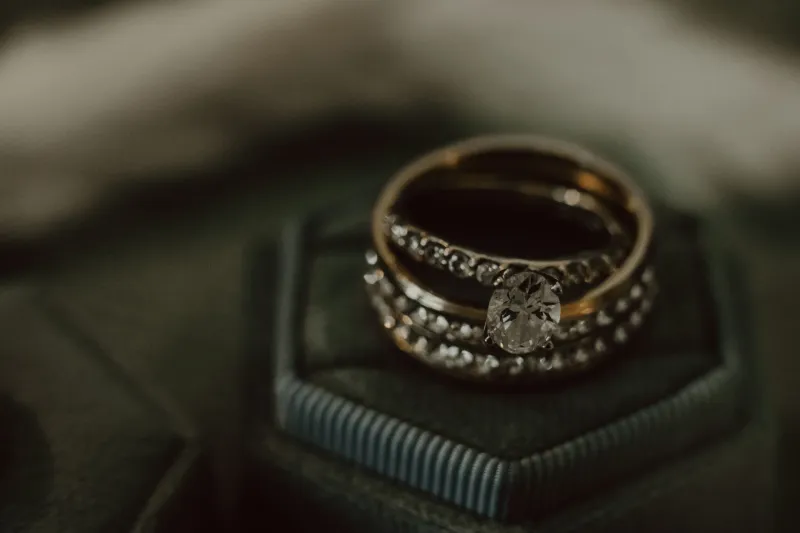
There is a particular kind of inheritance that arrives not in a sealed envelope from an estate attorney, but in a velvet box — perhaps slightly worn at the corners, its lining still faintly scented with a grandmother's perfume. Inside rests a gold bangle, a strand of carefully linked chain, or a ring whose weight feels immediately, inexplicably familiar. This is the heirloom paradox: an object purchased for beauty and pleasure that quietly, over decades, transforms into one of the most meaningful financial and emotional assets a family can possess.
At Vero Gold, we believe that every piece of fine gold jewelry carries within it the potential for exactly this kind of endurance. The question worth examining is not simply whether gold jewelry holds value across generations, but how — and why the most thoughtful families in America are beginning to treat their gold collections with the same strategic intention they apply to real estate or equity portfolios.
The Financial Architecture of Gold Jewelry
Gold has served as a store of value for more than five thousand years, and its relevance to modern wealth planning is anything but antiquated. According to jewelry appraisers who work with estate planners across the country, fine gold pieces — particularly those crafted at 18-karat or higher purity — retain intrinsic metal value regardless of shifting fashion cycles. Unlike luxury handbags or even certain gemstones, whose secondary market prices can fluctuate dramatically based on brand positioning, gold's worth is anchored to a globally traded commodity.
"What I consistently see in estate appraisals," notes one independent certified appraiser based in New York who has evaluated collections for high-net-worth families for over two decades, "is that intentionally acquired gold jewelry — pieces chosen for quality of craftsmanship and purity of metal rather than trend-driven novelty — holds and frequently appreciates in assessed value over time. The families who approach jewelry as they would any other tangible asset tend to build collections that genuinely matter to the next generation, both sentimentally and financially."
This dual nature — the emotional and the economic existing within the same object — is precisely what distinguishes fine gold from almost every other category of luxury expenditure.
What Wealth Advisors Are Telling Their Clients
The conversation around tangible assets in family wealth planning has grown considerably more sophisticated in recent years. Family wealth advisors across major US financial centers increasingly counsel clients to consider physical gold — including fine jewelry — as a component of a diversified legacy strategy. Unlike paper assets, gold jewelry is not subject to the same counterparty risks that accompany stocks, bonds, or even certain real estate holdings.
"There is a reason that families who have maintained multi-generational wealth often have strong jewelry traditions," observes one wealth advisor who works with affluent families in the Southeast. "It is not nostalgia — or not only nostalgia. Gold jewelry is portable, private, and durable in ways that other asset classes simply are not. A well-chosen piece can travel across borders, survive economic disruptions, and be liquidated or transferred with relative ease."
For families considering how to structure their legacy, this counsel carries real weight. A collection of thoughtfully acquired gold pieces — each documented with provenance, original receipts, and periodic appraisals — functions as a parallel wealth vehicle, one that can be worn and cherished in the present while quietly appreciating toward the future.
The Emotional Calculus of the Heirloom
Yet to reduce the gold heirloom to a financial instrument alone would be to misunderstand its most profound power. The families who speak most movingly about inherited gold pieces rarely lead with market value. They speak instead about continuity — the sensation of wearing something that a mother or grandmother wore, of feeling connected across time to someone no longer present.
Sarah, a 41-year-old attorney in Chicago, inherited a simple 18-karat gold cuff from her late grandmother three years ago. "She wore it every single day for forty years," Sarah recalls. "When I wear it now, I am not thinking about what it is worth at auction. I am thinking about her. But I will also tell you this — when my daughter asks about it, I plan to have it properly appraised and documented so that she understands exactly what she is receiving. That feels like a responsibility."
This instinct toward stewardship is increasingly common among Americans who inherit fine jewelry. The piece becomes a prompt for intentionality — a reminder that the objects we choose to surround ourselves with carry meaning that outlasts the moment of acquisition.
Designing for Longevity: What Makes a Piece Heirloom-Worthy
Not every gold piece is equally positioned to become a family treasure. Jewelry appraisers and estate specialists consistently identify several qualities that distinguish heirloom-grade pieces from those that will not survive the test of time — or taste.
Metal purity remains the foundational consideration. Pieces crafted in 18-karat or 22-karat gold carry a higher intrinsic value and are less susceptible to the kind of wear that diminishes lower-karat alloys over decades of use.
Design restraint is equally critical. Jewelry that leans heavily on a specific era's aesthetic trends — whether that is the maximalism of the 1980s or the novelty motifs of any given decade — tends to feel dated within a generation. Pieces defined by clean proportion, architectural elegance, and a certain timeless geometry are the ones that children and grandchildren actually want to wear.
Craftsmanship integrity determines physical longevity. Prong settings that loosen, chains with weak links, and clasps that fail are not merely inconveniences — they are vulnerabilities that can result in loss or costly repair. Pieces built to exacting standards of construction endure.
At Vero Gold, these principles inform every design decision we make. Our commitment to premium materials and considered aesthetics is, in essence, a commitment to the future owners of our pieces — whoever they may be.
Building a Collection with Intention
For those beginning to think about their gold collection as a legacy rather than a wardrobe, the shift in perspective need not be dramatic. It begins simply: with documentation. Retain purchase receipts, request certificates of metal purity, and schedule periodic appraisals — particularly as gold's spot price fluctuates. Store pieces properly, in individual soft pouches or compartmentalized cases that prevent scratching and tangling.
More broadly, resist the impulse to acquire impulsively. Each addition to a legacy collection deserves the same consideration one might give to a significant financial decision — because, in the fullest sense, that is precisely what it is.
The gold pieces you wear today are not merely expressions of personal style. They are, if chosen wisely, the opening chapters of a story your family will continue to tell long after you are gone. That is the heirloom paradox, resolved: beauty and value, present and future, existing in perfect, enduring harmony.