The Jewelry We Keep: What Your Gold Pieces Reveal About Who You Are
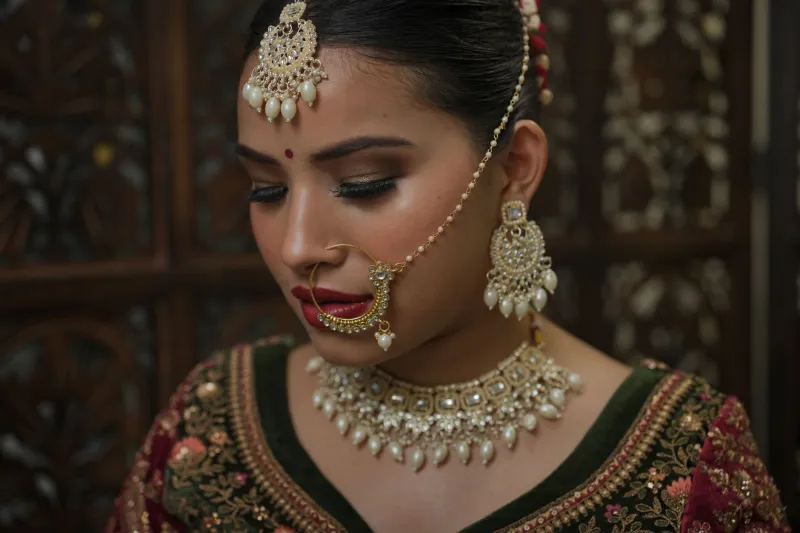
Consider the woman who reaches for the same gold chain every morning without deliberation—the one her mother wore, or the one she bought herself after a particularly hard-won professional milestone. She is not simply accessorizing. She is, in a gesture so habitual it has become invisible, telling herself something true about who she is and what she values.
Fine jewelry has always occupied a unique position in the human relationship with adornment. Unlike clothing, which we exchange daily and discard seasonally, the gold pieces we choose to keep tend to stay. They accumulate meaning the way a well-loved book accumulates marginalia—quietly, privately, over years. And for those who approach their collections with genuine intentionality, the result is something more than a jewelry box. It is a record of a life.
Why Gold, Specifically, Carries Such Weight
Not all materials carry meaning with equal gravity. Gold's psychological resonance is, in part, a function of its permanence. It does not tarnish, corrode, or diminish with time. In a culture that prizes the new and discards the obsolete, gold's immunity to obsolescence makes it a natural vessel for the things we wish to preserve.
Dr. Carolyn Mair, a behavioral psychologist specializing in fashion and identity, has written extensively on how the materials we choose to wear reflect our relationship with continuity and change. Gold, she notes, tends to attract individuals who value legacy and substance over novelty—those for whom an object's history is as meaningful as its appearance. This does not mean gold wearers are resistant to change; it means they seek anchors as they evolve.
There is also the matter of tactility. Gold jewelry, particularly pieces of meaningful weight and craftsmanship, offers a kind of physical grounding. The press of a bangle against the wrist, the subtle swing of an earring—these sensations connect the wearer to the present moment in a way that lighter, more disposable accessories do not.
The Pieces That Become Part of Us
Psychologists use the term "extended self" to describe the objects we incorporate into our sense of identity. First articulated by consumer behavior researcher Russell Belk, the concept holds that certain possessions cease to feel like external objects and begin to feel like genuine extensions of who we are. For many women, a particular gold piece occupies exactly this territory.
Amanda Chen, a San Francisco-based venture capitalist and lifelong jewelry collector, describes her relationship with a thin 22K gold band she purchased during a solo trip to Kyoto in her early thirties. "I was at a pivot point," she says. "I had just left a company I'd helped build, and I didn't know yet what came next. I bought that ring on an afternoon when I felt completely free and completely uncertain at the same time. I've worn it every day since. It reminds me that I can handle not knowing."
This kind of emotional encoding is not unusual. What is notable is how deliberately women like Chen have come to approach their collections—not as an accumulation of beautiful objects, but as a curated vocabulary of self.
Intentional Curation as Identity Practice
The shift from passive acquisition to intentional curation is one of the defining characteristics of how affluent American women are engaging with fine jewelry today. Rather than purchasing in response to trends or occasion, a growing number of collectors are asking a more fundamental question before any acquisition: Does this piece belong in the story I am telling about myself?
This approach has practical implications for how a collection is built. A woman in her forties who has refined her aesthetic over decades may find herself editing as often as she acquires—releasing pieces that no longer feel true to who she has become, even if they remain beautiful by any objective measure. The jewelry that remains is not necessarily the most expensive or the most impressive. It is the most honest.
New York-based stylist and jewelry consultant Margaux Delaney works with clients at precisely this intersection of aesthetics and identity. "I always ask clients to show me the pieces they wear every single day without thinking about it," she explains. "Those are the pieces that are doing real work. Everything else is decorative. Our job is to figure out what the everyday pieces are saying, and then build around that truth."
Life Chapters Written in Gold
Fine jewelry has long served as a marker of life's significant thresholds—engagement rings, anniversary gifts, graduation presents. But the most meaningful collections often include pieces that mark quieter, more personal transitions: a gold pendant purchased after a divorce, a pair of earrings acquired to mark a first year of sobriety, a signet ring engraved with initials that honor a chosen identity rather than a given one.
These pieces function as what psychologists call "transitional objects" in adult life—tangible anchors to moments of transformation. Unlike a photograph or a journal entry, they are worn on the body, making the memory not merely accessible but present.
This is, perhaps, what distinguishes a meaningful collection from a merely valuable one. Value can be assigned by a gemologist. Meaning is assigned by a life.
Building a Collection That Reflects You
For those who wish to approach their gold jewelry with greater intentionality, a few principles offer a useful framework.
Begin with the pieces you already wear. Before acquiring anything new, take stock of what you reach for habitually and ask why. The answers often reveal more about your values and aesthetic than any style quiz or trend report.
Resist the pull of occasion alone. Pieces purchased specifically for events—a gala, a wedding, a board presentation—rarely become part of a meaningful collection. The pieces that endure are those chosen because they feel right on an ordinary Tuesday.
Allow your collection to evolve. Identity is not fixed, and a jewelry collection need not be either. Releasing pieces that no longer feel true is not a loss—it is a form of clarity.
Invest in craftsmanship you can feel. The weight, finish, and construction of a fine gold piece communicate quality in ways that transcend visual assessment. A piece you can feel on your body is a piece that will stay with you.
At Vero Gold, we believe that the finest jewelry is never merely decorative. It is intentional. It is personal. And when it is chosen with care, it becomes something the calendar cannot diminish—a piece of who you are, worn with the quiet confidence of someone who knows exactly what she values.