The Morning Ceremony: How Choosing Gold Transforms Getting Dressed Into a Daily Practice
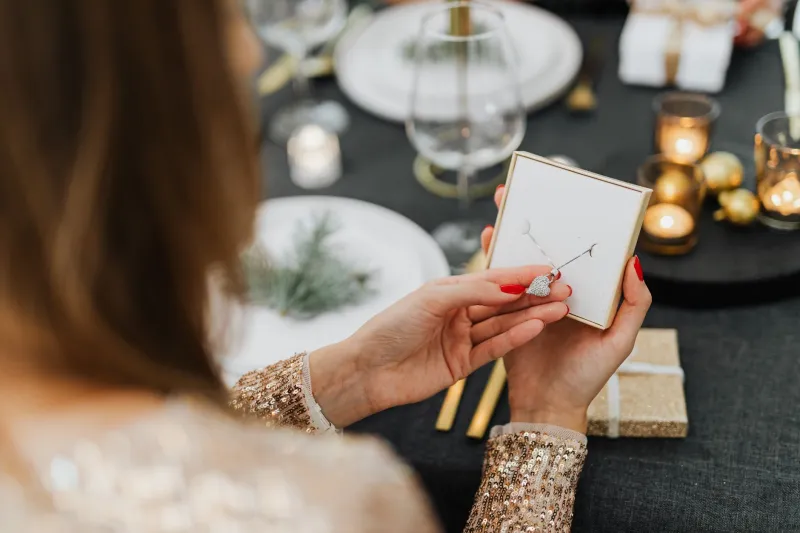
There is a moment, familiar to anyone who has ever stood before an open jewelry box in the quiet of early morning, that exists somewhere between waking and intention. The day has not yet taken shape. The calendar's demands have not yet asserted themselves. In that suspended space, a hand reaches for a chain, a cuff, a ring — and something shifts. A choice is made. A tone is set.
For a growing number of women and men across the United States, this moment is no accident. It is a ritual, cultivated and protected with the same care one might give to meditation or journaling. And at the center of it, more often than not, is gold.
Why Gold, Specifically
Not all materials carry equal weight in the psychology of adornment. Synthetic pieces, however beautiful, lack the elemental gravity that precious metals possess. Gold, in particular, occupies a singular position — it is warm to the touch, resistant to the passage of time, and freighted with centuries of human meaning. It does not corrode. It does not diminish. These are not merely metallurgical facts; they are the very qualities that make gold an ideal companion for intentional living.
New York-based stylist Renata Voss, who works with executives and creatives preparing for high-stakes professional seasons, describes gold as "the material that remembers who you are, even when the day tries to make you forget." Her clients, she notes, often return to the same two or three pieces during periods of pressure or transition — not out of laziness, but out of an instinctive understanding that certain objects carry personal resonance.
"There's a reason people reach for an heirloom ring before a difficult conversation," Voss explains. "Gold holds meaning in a way that synthetic materials simply cannot. It becomes a talisman without you ever deciding to make it one."
The Psychology of Intentional Adornment
Behavioral research on what psychologists call "enclothed cognition" — the documented influence of clothing and accessories on the wearer's mental state and performance — has steadily expanded in recent years. While much of the published work focuses on garments, practitioners in the mindfulness and wellness communities have long argued that jewelry functions as an even more intimate extension of identity, precisely because it is worn against the skin.
Dr. Simone Achebe, a licensed therapist based in Chicago who integrates somatic awareness into her practice, encourages clients to treat the morning dressing process as a form of conscious check-in. "I ask them: what do you need today? Grounding? Confidence? Softness? And then I ask them to let that answer guide what they put on their body — including, and sometimes especially, their jewelry."
The weight of a substantial gold bangle, she suggests, can function as a physical reminder of presence throughout the day — a proprioceptive anchor that returns the wearer to the body when the mind begins to drift into anxiety or distraction. "It's not magic," she clarifies. "It's intentionality made physical."
Building a Ritual That Holds
For those who wish to cultivate a more deliberate relationship with their morning adornment, the practice need not be elaborate. Seasoned collectors and stylists alike suggest beginning with constraint rather than abundance.
Select three to five gold pieces that feel genuinely meaningful — not merely expensive or fashionable, but personally resonant. Perhaps a delicate chain inherited from a grandmother. A signet ring purchased to mark a professional milestone. A pair of hammered hoops chosen on a solo trip that changed the course of something important. These are the pieces that carry narrative weight, and narrative weight is precisely what transforms a morning habit into a ritual.
Each morning, before reaching for a piece, pause. Consider the day ahead — its demands, its opportunities, its emotional texture. Then choose accordingly. A day requiring authority might call for a substantial cuff or a layered collar necklace. A day demanding quiet focus might be better served by a single thin band and nothing more. The act of matching inner state to outward expression is itself a form of self-knowledge.
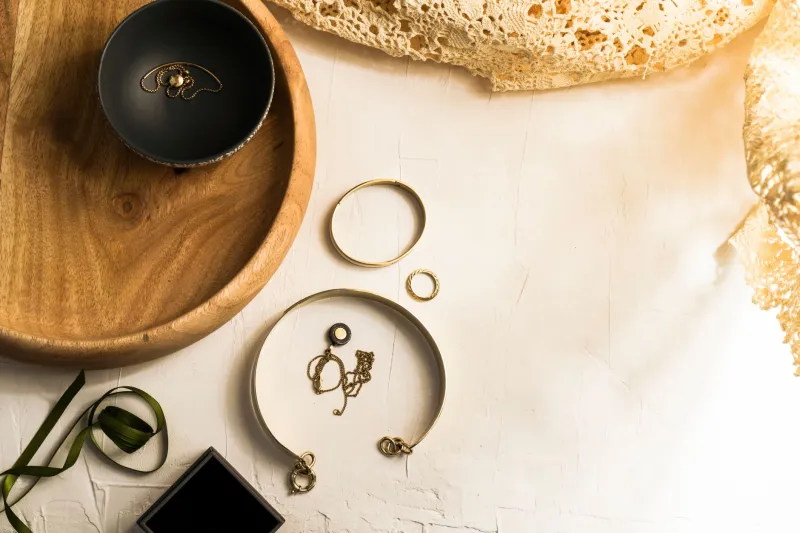
Voss recommends keeping a jewelry tray on the dressing surface rather than storing pieces in closed boxes. "Visibility matters," she says. "When your gold is visible to you each morning, it becomes part of the landscape of your intentions rather than an afterthought."
Gold as a Constant in an Inconstant World
There is something worth acknowledging about the particular moment in which this conversation is taking place. Daily life in the United States — and indeed across the broader culture — has grown increasingly fragmented. Attention is contested from the moment of waking. Notifications, obligations, and ambient noise compete for the interior space that ritual requires.
Against this backdrop, the deliberate pause of selecting a gold piece carries an almost countercultural charge. It is a refusal, however brief, to be swept immediately into the current of the day. It is a declaration that the self exists prior to the schedule.
Long-time gold collector and San Francisco-based architect Maren Hoyle describes her morning jewelry practice as "the one part of the day that belongs entirely to me." She has worn the same 22-karat yellow gold chain every day for eleven years, layering additional pieces around it depending on context and mood. "The chain is the constant," she explains. "Everything else is the conversation I'm having with that particular day."
This notion of a constant — a foundational piece around which the day's expression is built — appears repeatedly among those who have developed a genuine relationship with intentional adornment. It speaks to gold's unique capacity to serve simultaneously as anchor and canvas.
The Quiet Power of Showing Up Adorned
There is a final dimension to this practice that deserves acknowledgment, one that moves beyond the personal into the relational. When a person enters a room having dressed with intention — having chosen their gold with care and self-awareness — something is communicated before a word is spoken. Not wealth, necessarily, and not status in any crude sense, but presence. Deliberateness. A quality of attention that extends from how one treats oneself outward to how one engages with others.
This is, perhaps, the deepest argument for gold as the medium of intentional adornment. Its warmth mirrors the warmth of genuine attention. Its permanence mirrors the permanence of character. And its beauty — quiet, enduring, earned — mirrors the beauty of a life lived with care.
The ritual of the morning, then, is not merely about jewelry. It is about the kind of person one chooses to be when the day is still open, still unwritten. Gold, in that moment, is not decoration. It is declaration.