Something Old, Something New: The Thoughtful Art of Reinventing Inherited Gold
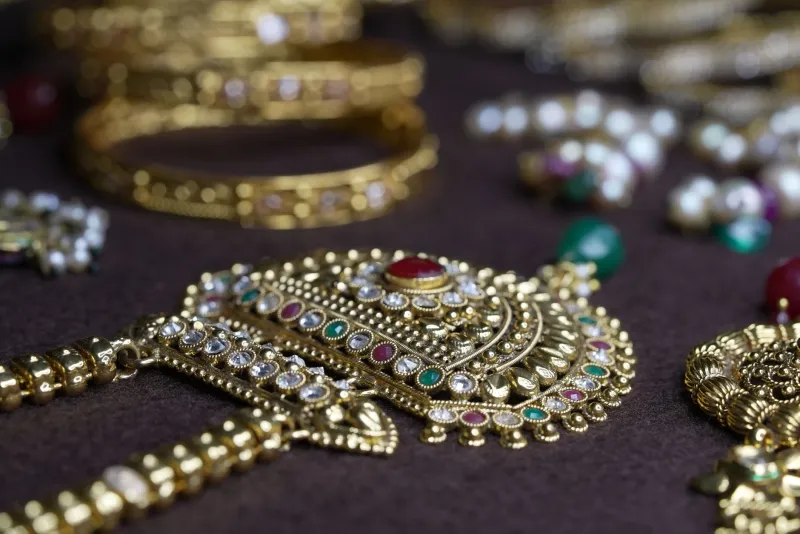
The box arrives, or perhaps it is placed directly into your hands — a velvet pouch, a worn leather case, a simple zip-lock bag that somehow survived decades in a nightstand drawer. Inside: your grandmother's wide link bracelet, your mother's cocktail ring with its slightly dated setting, a brooch your great-aunt wore to every holiday gathering without exception. The gold is real. The craftsmanship is evident. And yet, if you are honest with yourself, you cannot immediately picture wearing any of it.
This is not ingratitude. It is not a failure of sentiment. It is simply the reality of inheriting jewelry across generations — pieces designed for a different era, a different silhouette, a different set of social rituals. The question is not whether to honor the legacy these objects carry, but how to do so in a way that allows them to live forward rather than remain preserved, unworn, in a drawer of their own.
Begin with Stillness, Not Solutions
The single most common mistake inheritors make is rushing toward action. Grief, responsibility, and the practical anxiety of possessing valuable objects can create an urgency to resolve the situation — to decide, quickly, what becomes of each piece. Resist this impulse.
Gold does not expire. A bracelet that belonged to your mother will be no less transformable six months from now than it is today, and you will be in a considerably better position to make decisions that you will not later regret. Experienced jewelers and estate specialists consistently advise a waiting period — not as a sentimental formality, but as a practical strategy for ensuring that choices made about inherited pieces reflect genuine preference rather than emotional momentum.
During this period, wear the pieces at home. Photograph them against different outfits. Research their approximate era and style context. You may discover that a brooch you initially dismissed reads quite differently pinned to the lapel of a structured blazer than it did in the context of the estate sale from which it emerged. First impressions of inherited jewelry are frequently misleading.
Understand What You Have Before You Change It
Before engaging a jeweler about any redesign, invest in a professional appraisal from a certified gemologist or estate jewelry specialist. This step serves multiple purposes.
Practically, it establishes the current value of each piece — the gold content, the quality and identity of any stones, and the overall condition of the metalwork. This information is essential for insurance purposes, and it will inform every subsequent decision about transformation or preservation.
Aesthetically, an expert assessment may reveal qualities in a piece that you had not recognized. A ring that reads as simply old-fashioned may, under professional evaluation, turn out to be a signed piece from a significant mid-century American jeweler — a fact that changes both its financial profile and the way you might approach its future. Conversely, a piece you assumed was precious may prove to be gold-filled rather than solid gold, which affects the range of redesign options realistically available to you.
Knowing precisely what you have is the foundation upon which every good decision about inherited jewelry is built.
The Spectrum of Transformation
Once you have that foundation, the range of options available to you is considerably broader than most inheritors initially realize. Transformation exists on a spectrum, from the most conservative interventions to complete reimagining.
Restoration and refinishing represent the lightest touch. A piece that has suffered years of neglect — surface scratches, a dull patina, a clasp that no longer functions reliably — can often be restored to something close to its original condition by a skilled bench jeweler. This approach preserves the piece's historical integrity while making it genuinely wearable again. For pieces of significant age or maker significance, this is frequently the most appropriate path.
Resetting and recontextualization occupy the middle of the spectrum. A stone from a dated ring setting can be removed and placed into a contemporary mounting that reflects your personal aesthetic while preserving the gem your grandmother chose. A cluster of small diamonds from an old brooch can be reconfigured into a sleek, modern pendant. Gold from multiple pieces that you are unlikely to wear individually can be combined — with a skilled jeweler's guidance — into a single piece that carries the material legacy of several family members at once.
Full redesign represents the most significant transformation. Here, the original piece is essentially deconstructed: its gold is refined and recast, its stones repositioned or reset, and an entirely new object emerges. This approach is appropriate when the inherited piece holds strong emotional significance but little aesthetic appeal in its current form, and when you have a clear vision — ideally developed in collaboration with a trusted designer — of what you want the new piece to become.
The Emotional Architecture of the Decision
No practical guide to inherited jewelry can responsibly ignore the emotional dimension of these choices. The decision to alter a piece that belonged to someone you loved is rarely straightforward, even when the logical case for transformation is clear.
It helps to locate the actual source of your attachment. Are you connected to the object itself — its specific form, its history as a recognizable artifact of your family's story? Or are you connected to the material — the gold itself, the stones, the knowledge that your grandmother's hands once wore this metal? For many people, the honest answer is the latter. And if that is the case, a redesign that preserves the material while reimagining the form is not a betrayal of memory. It is a continuation of it.
Some families benefit from a brief conversation before any transformation occurs — particularly when multiple siblings have inherited pieces from the same source, or when a living relative has strong feelings about what should or should not be changed. These conversations, while occasionally uncomfortable, prevent the far greater discomfort of regret.
Finding the Right Jeweler for the Work
The quality of any inherited gold's transformation depends almost entirely on the quality of the jeweler you entrust with it. Seek out bench jewelers — those who do the actual metalwork themselves, rather than outsourcing to a third-party fabricator — with demonstrable experience in both estate work and custom design. Ask to see examples of previous redesign projects. Discuss your intentions in detail before any work begins, and ensure that all agreed-upon specifications are documented in writing.
The best jewelers in this space approach inherited pieces with a reverence that matches your own. They understand that they are not merely reconfiguring metal and stone — they are participating in the continuation of a family's material history. That understanding should be evident in every conversation you have with them before a single tool touches your gold.
Wearing It Forward
The ultimate measure of a successful inherited jewelry transformation is simple: you wear it. Not out of obligation, not on a single sentimental occasion, but regularly, naturally, as a piece that belongs in your life and on your body.
Gold has always been a medium of transmission — of value, of memory, of identity — across time. When an inherited piece is thoughtfully reimagined and genuinely worn, it does not lose its connection to the person who owned it before. It gains a new chapter. And that, in the end, is precisely what the people who left it to you would have wanted.