The Beauty of Becoming: Why Seasoned Gold Tells a Richer Story Than Pristine Metal
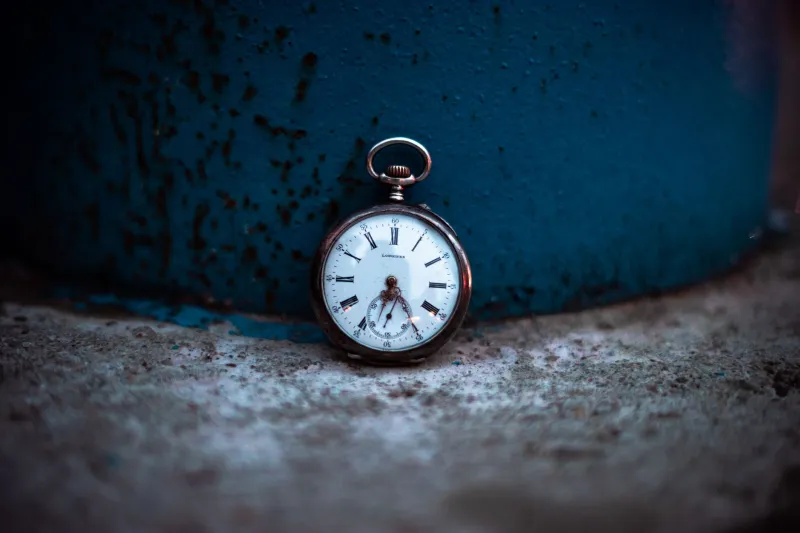
There is a particular quality of light that falls on gold that has been worn for years. It is not the sharp, almost aggressive gleam of a newly buffed surface. It is something softer—a warmth that seems to emanate from within the metal itself, as though the piece has absorbed something of every moment it has witnessed. It is the light of a life actually lived.
And yet, for most American jewelry owners, the instinct upon noticing the first fine scratch on a beloved bangle or the gentle dulling of a ring's high points is to book a polishing appointment. We have been quietly conditioned to believe that the ideal state of gold is its newest state—that maintenance means restoration, and that restoration means erasure.
A growing circle of luxury collectors is pushing back against that assumption entirely.
The Philosophy That Changes Everything
Wabi-sabi, the centuries-old Japanese aesthetic principle, holds that beauty is most honestly found in impermanence and imperfection. It is the philosophy behind the appreciation of a cracked tea bowl repaired with gold lacquer, of moss-covered stone, of hand-hewn wood that bears the marks of the craftsman's tools. It is not a philosophy of neglect. It is a philosophy of witnessing—of allowing objects to carry the evidence of their own existence.
Applied to fine gold jewelry, wabi-sabi offers a radical reframe. The fine scratches that accumulate on the surface of a yellow gold cuff are not damage. They are a record. The slight flattening of a ring's profile after years of daily wear is not degradation. It is biography.
This perspective resonates with something that many collectors already feel intuitively but rarely have language for: that the most meaningful pieces in a jewelry wardrobe are not the newest ones. They are the ones that have traveled farthest.
What Patina Actually Is
Gold, in its pure form, is chemically resistant in ways that most metals are not. It does not rust. It does not corrode in the conventional sense. What we call patina on gold jewelry is, in large part, a surface phenomenon—a complex interplay of micro-abrasions, the gradual redistribution of the metal's texture, and in some alloys, a subtle shift in color tone as the surface layer develops a different reflective quality than freshly polished metal.
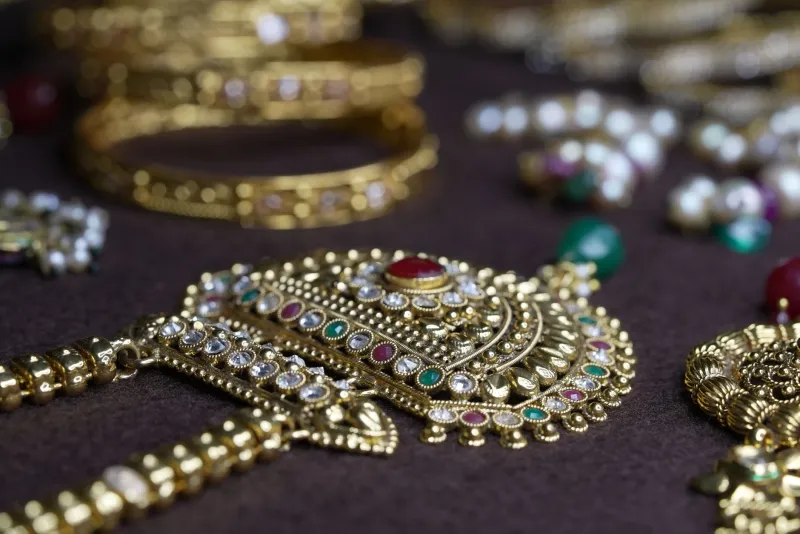
On higher-karat pieces, this process produces a particularly luminous result. The surface develops what jewelers sometimes describe as a "soft focus"—less mirror-like, more honeyed. The metal appears to hold light rather than throw it. Many collectors who have experienced this transformation firsthand describe it as the moment a piece truly came into its own.
Lower-karat gold alloys, which contain a higher proportion of other metals such as copper or silver, may develop more visible tonal shifts over time. A rose gold piece, for instance, may deepen in its warmth. These changes are not flaws. They are the fingerprints of the alloy's chemistry meeting the chemistry of a human life.
The Cultural Pressure to Polish
It is worth examining why the default in American jewelry culture skews so heavily toward the pristine. Part of the answer is commercial: jewelry retailers have a natural interest in encouraging maintenance visits, and the language of those visits tends to center on restoration rather than appreciation. Part of the answer is a broader cultural relationship with newness—a tendency to conflate freshness with value and wear with loss.
But there is also something more personal at work. Many people feel a quiet anxiety when they notice signs of wear on an expensive piece, as though the imperfection reflects something about their stewardship. The scratch becomes a small guilt. The dulled surface becomes a task.
Releasing that anxiety is, in many ways, the first act of truly owning something.
The Collector's Perspective
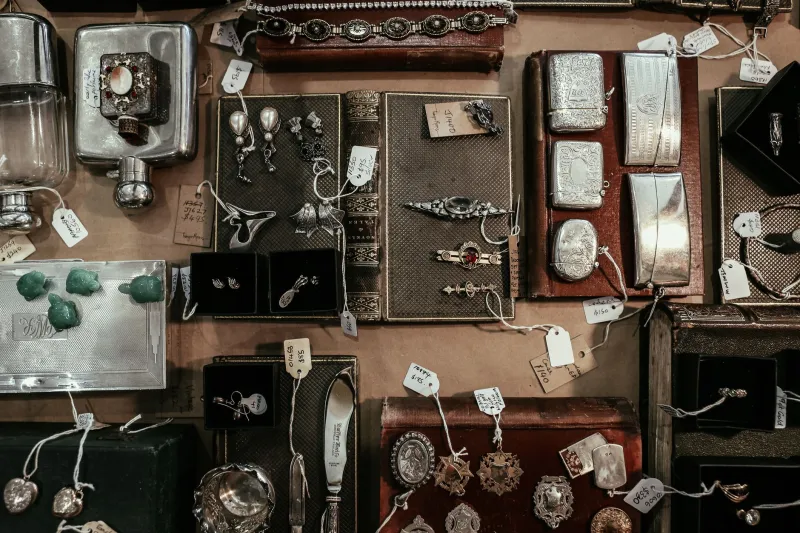
Among serious collectors of antique and estate jewelry, the concept of patina is not controversial at all—it is a mark of provenance. A Georgian mourning ring that retains its original surface finish is considered far more valuable, in both monetary and historical terms, than one that has been aggressively polished back to a generic shine. The patina is part of the object's authenticity. To remove it is to remove part of the story.
This same logic applies, with equal force, to contemporary pieces that have been worn with genuine commitment. A gold chain that has traveled with its owner through decades of mornings and evenings, through celebrations and ordinary Tuesdays, carries a kind of irreplaceable specificity. It is no longer simply a gold chain. It is that gold chain—shaped by a particular life, warmed by a particular body.
The most refined collectors understand this distinction intuitively. They do not reach for the polishing cloth every time the light catches a surface differently. They look more closely instead.
When Maintenance Still Matters
Embracing patina is not an argument against all care. Gold jewelry still benefits from regular cleaning to remove the buildup of lotions, oils, and everyday residue that can obscure the metal's natural beauty rather than enhance it. Prongs holding stones should be inspected periodically to ensure structural integrity. Clasps and closures deserve attention to function.
The distinction worth drawing is between cleaning and polishing. Cleaning preserves the piece and allows its earned surface character to show clearly. Aggressive polishing removes that character, resetting the clock and erasing what time has added. The former is stewardship. The latter, depending on the piece and the collector's intention, can be a form of loss.
For pieces with deep sentimental significance—an engagement ring worn through decades of marriage, a bangle inherited from a grandmother who wore it daily—this distinction becomes even more acute. To polish such a piece to factory brightness is to prioritize appearance over meaning.
Gold That Has Earned Its Light
At Vero Gold, we believe that the most compelling jewelry is jewelry that has been genuinely worn—chosen with intention each morning, carried through the texture of a real life, and allowed to become something that could not have been purchased new. The gleam of unworn gold is beautiful. But the warmth of gold that has been lived in is something else entirely.
There is a particular confidence that comes with wearing a piece that shows its history. It signals that you did not acquire your gold merely to possess it. You acquired it to wear it—and you have. That is, in every sense that matters, the point.
Let your gold show its age. It has earned the right.