Breaking the Mold: How Today's Designers Are Reinventing Gold's Most Enduring Forms
There is a particular kind of creative courage required to look at something universally admired — a Victorian mourning locket, a mid-century Italian rope chain, a Georgian closed-back foiled setting — and decide that it can be something more. Not replaced, not discarded, but fundamentally reconsidered. This is precisely the intellectual territory that a growing cohort of contemporary luxury jewelry designers has chosen to inhabit, and the results are reshaping what it means to wear gold in America today.
This movement is not nostalgia dressed in new packaging. It is something far more rigorous: a systematic deconstruction of gold's most canonical forms, followed by a deliberate and often startling reconstruction into designs that feel both historically grounded and urgently of the moment.
The Archive as Raw Material
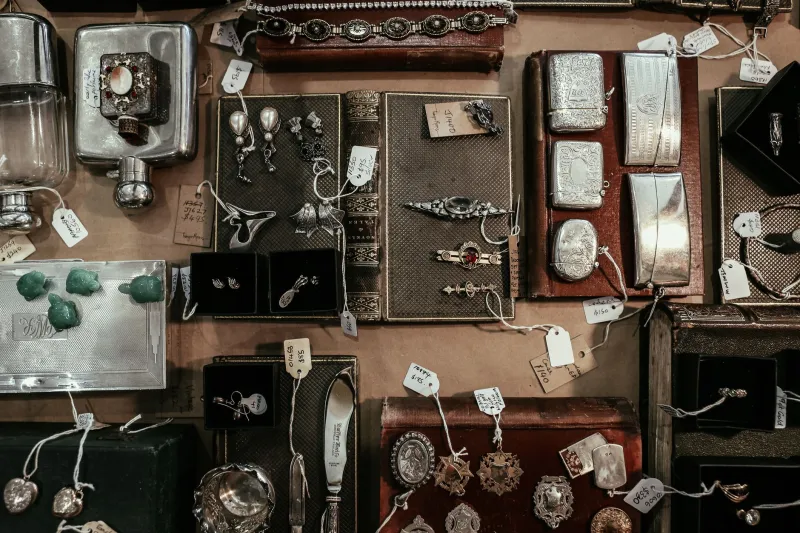
For designers working within this paradigm, the historical archive functions less as a museum and more as a workshop. The silhouette of a Hellenistic wreath, the repetitive geometry of an Art Deco bracelet, the organic granulation techniques of ancient Etruscan goldsmiths — these become building blocks rather than blueprints.
New York-based designer Marlowe Ashby, whose work has appeared in the collections of several prominent American art patrons, describes her process as one of deliberate fragmentation. "I spend weeks with reference images before I touch a single gram of gold," she explains. "I'm looking for the underlying logic of a piece — the structural decision that made it feel inevitable to its original maker. Once I find that, I can start asking what happens when I isolate it, scale it differently, or place it in conversation with an entirely different tradition."
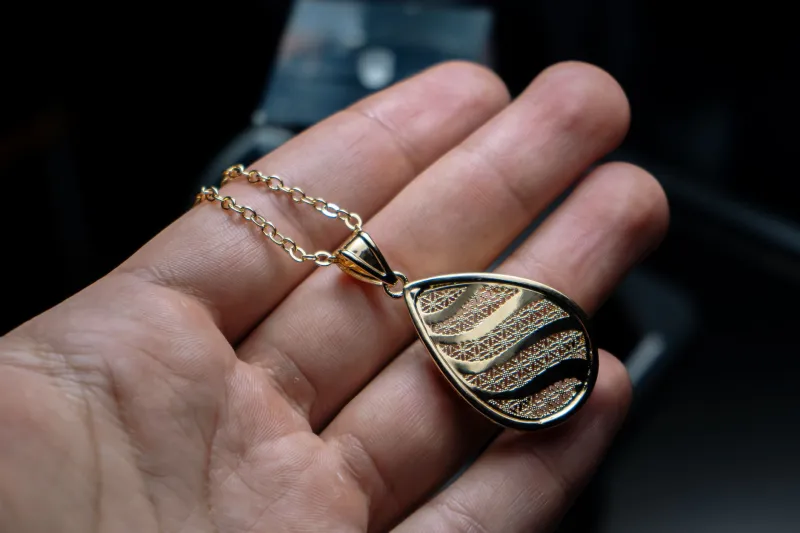
The outcomes of this methodology are pieces that reward sustained attention. A cuff that initially reads as abstract sculpture reveals, upon closer examination, the proportional language of a Roman torc. A pendant that seems almost brutalist in its simplicity turns out to be a reinterpretation of a Mughal jadau setting, stripped of its stones and allowed to speak through the gold alone.
Why Collectors Are Taking Notice
The appetite among serious American collectors for these reinterpreted works has grown considerably over the past several years, and the reasons are both aesthetic and financial. From a purely practical standpoint, gold jewelry that occupies a distinctive artistic position tends to hold — and often appreciate — in value more reliably than pieces that conform to prevailing trends without transcending them.
Beyond the investment calculus, there is the matter of wearability. Pieces that carry genuine conceptual weight have a staying power that purely fashionable jewelry rarely achieves. A collector who acquires a bracelet that engages meaningfully with the history of its form is unlikely to find it dated in a decade. The historical reference provides an anchor; the contemporary reinterpretation provides relevance.
Jewelry consultant and private collection advisor Diana Torrance, who works with high-net-worth clients across the American Northeast and West Coast, has observed this shift firsthand. "My clients are increasingly sophisticated about the difference between a piece that is merely expensive and a piece that is genuinely significant," she notes. "They want to understand the thinking behind the work. When a designer can articulate a clear intellectual lineage — here is what I studied, here is what I questioned, here is what I made — that narrative becomes part of the value of the object."
The Craft Beneath the Concept
It would be a mistake to treat this movement as purely cerebral. The most compelling work in this space is grounded in an exceptional command of goldsmithing technique. Deconstructing a classic form and rebuilding it in a new idiom requires a thorough understanding of why the original form worked — its structural integrity, the way it interacts with light and skin, the physical logic of its construction.
San Francisco-based goldsmith Elias Varga, trained in Budapest before establishing his American practice, makes this point emphatically. "You cannot intelligently subvert a technique you do not fully understand," he says. "When I work with granulation — that ancient process of fusing tiny spheres of gold to a surface — I have to know it well enough to know exactly which rules I can break and which ones will cause the piece to fail. The freedom comes from the discipline."
This commitment to craft is visible in the finished work. Pieces made by designers who genuinely understand their historical sources have a physical confidence that distinguishes them from superficially similar work. The proportions feel considered rather than arbitrary. The surface treatments respond to the underlying structure rather than contradicting it.
Reading the Piece on Your Own Terms
For the collector approaching this category for the first time, a few principles are worth keeping in mind. First, seek out designers who can speak fluently about their sources. The ability to articulate historical references is not mere intellectual posturing — it is evidence that the design decisions were made deliberately rather than accidentally.
Second, pay attention to the relationship between concept and material. The finest work in this space uses gold not simply as a precious metal but as a medium with its own expressive properties — its warmth, its malleability, its capacity to record the touch of a hand in its surface. Designs that exploit these qualities rather than simply filling a mold with them tend to reward long-term ownership.
Finally, consider the piece's relationship to your existing collection. One of the most compelling aspects of reinterpreted gold jewelry is its capacity to create unexpected dialogues with other pieces. A contemporary bracelet that draws on ancient granulation techniques may, when worn alongside a more traditional piece, illuminate qualities in both that neither could reveal alone.
The Ongoing Conversation
What makes this moment in American jewelry particularly interesting is the sense that the conversation between past and present is genuinely open-ended. Designers working in this space are not arriving at fixed conclusions — they are posing questions, and those questions tend to generate further questions. Each piece becomes a kind of argument, inviting the wearer into a dialogue with centuries of craft and intention.
For those who have always understood gold jewelry as something more than decoration — as an object capable of carrying meaning, history, and genuine artistic vision — this movement offers some of the most compelling work being made today. The classics are not being abandoned. They are being honored in the most demanding way possible: by being truly understood, and then, with full knowledge and considerable skill, reimagined entirely.